Description
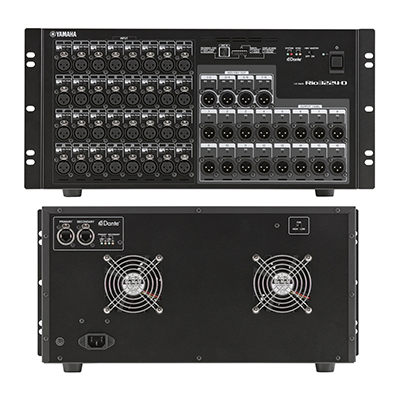
The Yamaha Rio3224-D is the first-generation high-capacity I/O rack that pioneered the use of the Dante network protocol for Yamaha’s professional audio systems. While there is a newer “D2” version, the original Rio3224-D remains a staple in many broadcast facilities and OB vans due to its proven reliability and industry-standard performance.
Core Specifications
-
Analog Inputs: 32 (XLR) with high-performance, recallable mic preamps.
-
Analog Outputs: 16 (XLR).
-
Digital Outputs: 4 AES/EBU outputs (8 channels total).
-
Sampling Rate: Supports 44.1 kHz, 48 kHz, 88.2 kHz, and 96 kHz.
-
Network Protocol: Dante (Primary and Secondary ports for redundancy).
Key Features for Broadcast & Live Production
-
The “Natural Sound” Philosophy: Yamaha designed the preamps in the Rio3224-D to be transparent. This is crucial for broadcast because it captures the source exactly as it sounds, allowing the mixer to shape the audio without dealing with unwanted “coloring” from the hardware.
-
Dante Networking: It allows for the transmission of up to 512 channels of uncompressed digital audio over a standard Gigabit Ethernet network. This eliminates the need for heavy, expensive analog snakes and reduces signal degradation over long distances.
-
Gain Compensation: This is a vital feature when sharing the Rio between two consoles (e.g., a Front of House console and a Broadcast/Monitor console). When the analog gain is adjusted on one console, the Rio automatically applies digital compensation so the signal level remains constant for the other console.
-
Redundancy: The Primary and Secondary ports allow for a “glitch-free” redundant network. If one cable or switch fails, the audio continues seamlessly on the backup line.
Difference Between Rio3224-D and Rio3224-D2
If you are deciding between the original and the newer version, here are the main differences:
| Feature | Rio3224-D (Original) | Rio3224-D2 (Newer) |
| Display | Basic LED indicators only. | Character display for gain/status. |
| Power Supply | Single internal power supply. | Dual redundant power supplies. |
| Airflow | Standard cooling. | Redesigned airflow (quieter fans). |
| Sound | Industry standard. | Slightly refined circuitry/clarity. |
Integration in Your Workflow
In a setup involving a Ross Acuity switcher and Sony HSC-100RF cameras, the Rio3224-D acts as your “audio hub.”
-
Efficiency: You can place the Rio at the stage or field location to collect all mic feeds and send them back to the control room or OB van via a single fiber/ethernet cable.
-
Reliability: In a “Fixer & Broadcast Service” context, the Rio3224-D is a “safe” choice—clients worldwide know this gear and trust its stability.
Pro Tip: Ensure your firmware is updated to the latest version to maintain compatibility with newer Yamaha consoles (like the Rivage PM series) and to ensure the most stable Dante clocking performance.
Reviews
There are no reviews yet.